
We’re watching ‘Greenland’, speculating on what we’d do if a comet was heading to earth. Our plan when we put ourselves in any disaster movie usually involves fleeing on the motorbike, because John says that would give us more flexibility than the car.
This time, John’s no longer well enough to drive the bike, which has stood idle outside the house for many months, so we’re going to have to face the comet.
Then Gerard Butler gets the call from the government telling him that his family have been selected for the bunker and that they have an hour to pack their bags, and they faff around in a panic, not knowing what to take.
We’ve got no worries on that score – our bags are already packed in case John gets a call from the lung transplant unit. But if the Ministry of the Apocalypse rings instead to tell us that we’ve been chosen for the post-comet world, we’ll be set to go there as well.
Who wrote this script?
Next day – in the kind of plot twist that only happens in disaster movies – the transplant unit rings John at 6am to tell him that they have some lungs that might be suitable, and how soon can we get there? Never mind a comet, our world’s about to change.
John went on the lung transplant list in October 2019, four years after being diagnosed with idiopathic pulmonary fibrosis, a progressive incurable lung disease. He was relatively healthy then, and my most nagging concern was about the logistics of getting The Call when we were in separate places.

A pandemic, lockdowns and John’s worsening health put an end to those minor concerns. In the last 10 months, the furthest away from him I’ve been is the park at the end of our street.
A month on from John having a lung transplant, I feel like I’ve witnessed a miracle. Yes, it’s down to modern medicine and skilled clinicians, rather than an act of God, but I couldn’t feel any more wonder than if I was at the raising of Lazarus.
The wonder is not that he was sick and now he’s better. It’s not that he’s been cured, because there is no cure. It’s that his disease has been taken away. Literally removed overnight. And something better put in its place to literally give him new life.
Try not to panic
Advanced IPF means your lungs barely work, and every simple part of daily living is a physical and mental challenge. Any small ‘activity’ – getting dressed, walking from one room to another, talking for more than a few minutes – is punctuated by breathlessness or will make you breathless. Anything bigger – climbing the stairs, walking any distance – is virtually impossible, even with supplemental oxygen. But you need to maintain some level of activity to try and stay fit enough for a possible transplant.
So you methodically plan the small, individual steps of each task – even something as simple as just standing up – and carefully work your way through them, while fighting off the waves of anxiety about the oncoming breathlessness. The problem with being breathless when your lungs barely work is that you can’t take in air because the disease is restricting your lungs. At this stage, it takes a lot of mental effort not to panic, and to trust in the techniques you’ve developed to try and control your breathing.
John once said it felt like he was drowning – as soon as he thought he’d got his head above the water to take a breath, another wave would crash down on him.
Oxygen dropping, heart rate rising
And while this is going on, your oxygen saturation levels are dropping, which means not enough oxygen is getting around your body, and your heart rate is racing. So you have to make sure you’re monitoring these levels and adjusting your intake of supplemental oxygen. Much of John’s mental energy in recent months was spent on planning and preparing himself for the simplest of tasks.
And did I mention the coughing? IPF causes severe coughing episodes which, if your lungs are barely working, is difficult and absolutely exhausting and also triggers breathlessness. But you also have to put yourself through ‘controlled’ coughing sessions each morning to clear your lungs of all the mucus and gunk that gathers during the night.
And now he has none of that. It’s been taken away. Removed overnight. A miracle.
In a different world
Within a week of his transplant, John was walking 100m down the hospital corridor. A couple of days later, he was walking up two flights of stairs.
Now out of hospital, he doesn’t even have to think before doing the small activities that were such a struggle a short while ago.
Walking upstairs might be tiring for him but it’s not the overwhelming prospect that made us get a stairlift only a few months ago. Last month I was his full-time carer – this week he brought me a cup of tea in bed.
His daily exercise programme is a reminder, if we need it, that the recovery road is long, but we feel in a completely different world to the one we’d been living in.
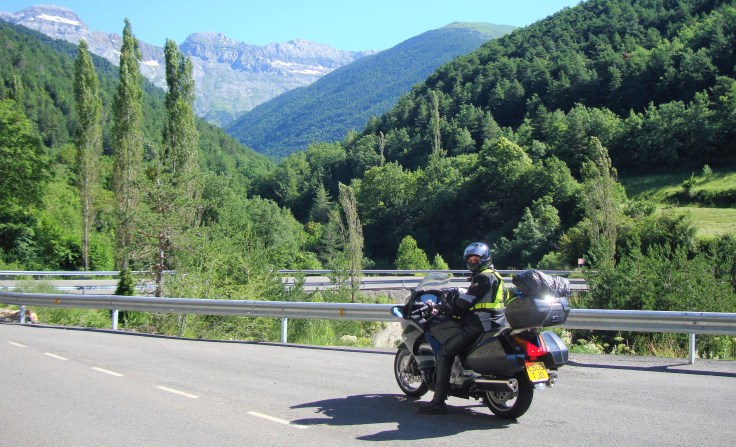
I find myself unexpectedly grinning. We’re looking forward again – to motorbike trips, to visiting family, just to possibilities we haven’t thought about for a couple of years.
Gratitude
Of course, life with a transplant is uncertain – we’ll be living with the ever present possibility of organ rejection, and the increased risk of infection from being on lifelong immunosuppressants. But for now, we’ve dodged the comet. Without a transplant, John was unlikely to make it to the summer, so we feel we’ve been given a second chance.
We feel immense gratitude: for the timing of the transplant, when time was running out; for the skill and care of the transplant team at Harefield; and most of all, for the anonymous donor and their family.
We’re acutely aware that a very different story is running parallel to ours: the donor’s death and the grief of their family. While I’m waking up feeling happy, they’re waking up feeling empty. While I’m making tentative plans for the future, they’re making plans for a funeral. We’ve offered thanks and prayers for them and can only hope that they gain consolation from knowing what a miraculous gift a transplant is.
 Just my type
Leave a comment